All About JEE Advanced Exam
All About JEE Advanced Exam
The Joint Entrance Examination (Advanced) or JEE (Advanced), is a competitive examination that takes place once a year either in May or June, depending on the institute that oversees the exam in the respective year. Unlike JEE (Main) whose results lead undergraduate admissions to a variety of engineering colleges, JEE (Advanced) is designed specifically for admission to Indian Institutes of Technology (IITs), which are known throughout the country for their high academic standard and competitive advantage.
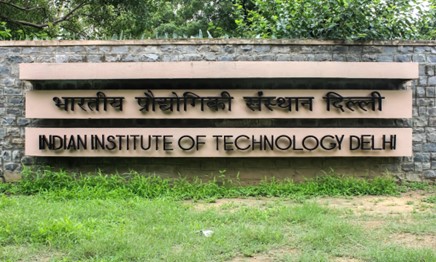
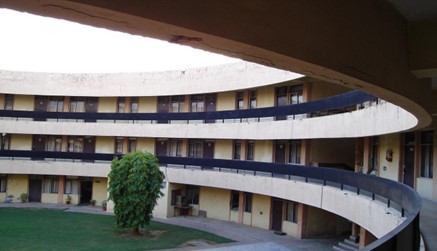
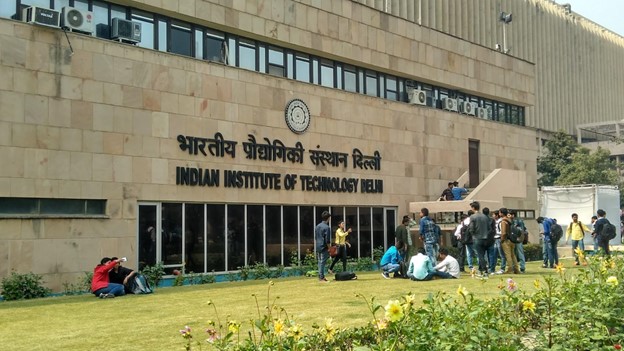
The Indian Institutes of Technology, better known as IITs, are a matrix of engineering and technology institutions all over India. They are the top-most engineering institutions in the country, with many students aiming to get admission to them. There are many reasons IITs are so sought, chief amongst them being the excellent education quality, the good standard of both faculty and students, the infrastructure, amenities, and finally, good placement after graduating. Currently, there are 23 IITs dispersed around the country; the top seven are as follows:
- IIT Madras
- IIT Delhi
- IIT Bombay
- IIT Kanpur
- IIT Roorkee
- IIT Kharagpur
- IIT Guwahati
JEE Advanced Eligibility Criteria
Five key criteria described in the original article.
To be eligible to sit JEE (Advanced), a prospective examinee needs to pass five key criteria.
Criterion 1: Performance in JEE Main
Candidates who want to be eligible for JEE (Advanced) must be in the top 2,50,000 successful candidates (all categories) in the B.E/B.Tech paper of JEE (Main). In the case of tied ranks/scores, the number of top candidates may increase. Foreign nationals who own an OCI/PIO card (secured before March 2021 if they’re taking the exam this year) will be considered Indian nationals for the sake of seat allocation to the IITs.
Criterion 2: Age Limit
Candidates should not be older than 25, although exceptions are made for SC, ST, and PwD candidates, who should not be older than 30.
Criterion 3: Number of Attempts
A candidate has a maximum of two attempts to clear JEE (Advanced) in 2 consecutive years.
Criterion 4: Appearance in Class XII (or Equivalent) Examination
A candidate should have appeared for the class XII (or equivalent) examination for the first time either in the year before or the year of the current JEE (Advanced), with Physics, Chemistry, and Mathematics as compulsory subjects. Candidates who have given their grade XII (or equivalent) examination for the first time two years before the current JEE (Advanced), will not be eligible for JEE (Advanced), even if they have the required subject combination.
Note: Here, ‘appearance in class XII (or equivalent)’ refers to the declaration of the examination results by the respective board; even if a candidate’s result got withheld, it will still count as an appearance.
Criterion 5: Earlier Admission at IITs
Any candidate who wants to be eligible for JEE (Advanced) should not have gotten admission at any IIT through the Joint Seat Allocation Authority (JoSAA). There are no exceptions to this; irrespective of whether or not the candidate accepted the admission, accepted a seat at the IIT by reporting online, or continued with the program. Candidates who, after joining any IIT, had their admission cancelled for whatever reason are also not eligible for JEE (Advanced).
On the other hand, candidates who, despite being allocated a seat at an IIT through JoSAA, did not report online at any reporting centre, withdrew before the last round of seat allotment or had their seat cancelled at the last round of seat allotment, are eligible for JEE (Advanced). Also, candidates who have been admitted to a preparatory course at any IIT for the first time, are eligible for JEE (Advanced). Of course, in all of the above cases, criteria 1 through 4 must be fulfilled.
JEE Advanced Syllabus
Physics, Chemistry and Mathematics topics covered in the original article.
Typically, JEE (Advanced) will have three subjects - Physics, Chemistry, and Mathematics - and the content that is tested is as follows.
Physics
- General Physics
- Mechanics
- Thermal Physics
- Electricity and Magnetism
- Electromagnetic Waves
- Optics
- Modern Physics
Chemistry
- General Chemistry
- States of Matter; Gases and liquids
- Atomic Structure
- Chemical Bonding and Molecular Structure
- Chemical Thermodynamics
- Equilibrium
- Electrochemistry
- Kinetics
- Solid State Chemistry
- Solutions
- Surface Chemistry
- Classification of Elements and Periodicity in Properties
- Hydrogen
- s-block, p-block, d-block and f-block Elements
- Coordination Compounds
- Isolation of Metals
- Principles of Qualitative Analysis
- Environmental Chemistry
- Basic Principles of Organic Chemistry
- Alkanes, Alkenes and Alkynes
- Benzene and Phenols
- Alkyl Halides
- Alcohols, Ethers, Aldehydes and Ketones
- Carboxylic Acids, Amines, Haloarenes and Biomolecules
- Polymers
- Chemistry in Everyday Life and Practical Organic Chemistry
Mathematics
- Sets, Relations and Functions
- Algebra
- Matrices
- Probability and Statistics
- Trigonometry
- Analytical Geometry
- Differential Calculus
- Integral Calculus
- Vectors
There are many reference books that one can refer to to better understand the basic concepts of the three subjects. Notable examples are books by Resnick and Halliday (for Physics), G Tiwani and Vikas Gupta and Pankaj Joshi (for Mathematics), and Morrison and Boyd, Narendra Awasti, and J.D. Lee (for Chemistry).
Exam Structure and Format
The JEE (Advanced) has two papers - each one is three hours long, and it is mandatory to appear for both. The exam date will not change even if there is a public holiday. PwD candidates that have learning disabilities (at least 40% impairment as applicable) are eligible to have one compensatory hour for each paper. These candidates may also ask for a scribe. To get the extra hour and/or the scribe, such candidates will have to fill out the required form while registering. Candidates whose applicable impairment is less than 40% are also eligible for one hour of extra time and the services of a scribe. They must also fill out the respective form during registration.
Registration is usually done in April since the exam is in May. Registration can only be done online through the online registration portal. There is a registration fee, and the amount depends on the candidate’s social category; this information is naturally provided on the registration portal. The registration is non-refundable and non-transferable and does not include service charges, processing fees, and any other charges asked by the payment gateway.
Use JEE Main credentials, fill the registration form, upload the required documents, pay the application fee online, and download the registration acknowledgement.
Each paper of the JEE (Advanced) is a mixture of multiple choice questions (MCQs), numerical answer type (NAT) questions, and matching type questions. MCQs are questions with a set of different answer options out of which only one is correct, NAT questions are those that require a numerical answer rounded accordingly, and matching questions require the candidate to match the items from one list to another.
Grade Weightage
In the JEE (Advanced), the questions asked from each of the three subjects are not weighted equally, i.e., the amount of questions asked about each topic of each subject is not equal. Some subjects will have more questions, and subsequently more grade weightage, than others. The weightage given to each topic of each subject generally depends on the amount of its content.
Physics
Given the Physics syllabus, Mechanics has the highest weightage, followed by Electrostatics and Magnetism. After that, there are Optics, Modern Physics and Thermodynamics, each of which holds significant weightage. Finally, topics like Waves and Oscillations contribute a smaller amount to one’s overall Physics score.
Chemistry
Given the Chemistry syllabus, Physical Chemistry has the highest weightage, after which there is Organic Chemistry and Inorganic Chemistry.
Mathematics
The topics with the most weightage are Calculus, Coordinate geometry, and Algebra, contributing to 60% of the overall questions asked. These are followed by Geometry, Trigonometry and Vectors, which contribute the remaining 40%.
Naturally, any prospective student/candidate would want to give their best and attain a seat at any of the prestigious IITs, and in the current climate, with its high competition and even higher number of applicants, a good mentor goes a long way. Vidyalankar Classes and Publications is a coaching center where students can receive coaching while prepping for JEE (Main), JEE (Advanced), and NEET.